20 Years, 20 Voices: Katy Woodington MBE
20 Years, 20 Voices celebrates the people, charities, donors and partners who have helped shape Sussex Community Foundation over the past two decades.
Katy Woodington MBE, UK Community Investment Lead at RWE, has worked alongside the Foundation for over 10 years. Through the Little Cheyne Court Wind Farm Fund and later the Rampion Community Benefit Fund, RWE has helped direct millions of pounds into communities across Sussex, supporting local organisations and putting decision-making into the hands of local people.
Putting communities in control
RWE's relationship with Sussex Community Foundation began in the late 2000s, when plans were underway for the Little Cheyne Court Wind Farm.
As part of the project, RWE committed to creating a community benefit fund and wanted to ensure the funding reached the people and projects that mattered most locally.
"We wanted to identify the best way to deliver that funding, making sure there were fair, transparent processes in place and confidence that it would reach the things that mattered most to local communities," says Katy.
Rather than making decisions centrally, RWE chose an approach that remains central to its community investment strategy today: putting communities in control.
"We wanted local people to be involved in deciding what should be supported."
That shared belief in local decision-making led to the partnership with Sussex Community Foundation.
"The Foundation shared our belief in a grassroots, bottom-up approach. They were already building relationships with local groups and organisations and could support a panel of local people to make informed decisions about funding."

Why local giving matters
For Katy, place-based giving is about recognising the communities connected to the projects that generate the funding.
"This money is coming as a result of a renewable energy project being built in a particular area. It's a mechanism for sharing some of that benefit with the communities that are living in that area."
Over the years, RWE's approach has evolved, but the principle has remained the same.
"Every community is unique. They have different challenges and opportunities. We're a global business, but we're not the people with that level of local knowledge."
Instead, Katy believes the most effective approach is to trust local people and local expertise.
"That's why we've developed an approach that is place-based, grassroots and locally driven. And now we've got projects that are delivering really significant benefits.”
A partnership built on trust
One reason the partnership has continued for nearly two decades is a shared commitment to making funding accessible.
"We want straightforward but robust processes. Funding can be complicated, but there's no reason for community benefit funding to be complicated," says Katy.
She credits Sussex Community Foundation with striking that balance.
"The Foundation gets it right. Their strong relationships with local organisations and their presence in the area. They understand local need, while also providing the due diligence behind good grant-making."
Seeing impact on the ground
After 18 years of partnership, there are countless projects that stand out.
One is Rye District Community Transport, supported through the Little Cheyne Court Wind Farm Fund.
"The area around Little Cheyne Court is really rural. Transport services and rural isolation are challenging. When local bus services were reduced, community transport stepped in to fill the gap. That service became a lifeline for local people."
Katy is equally inspired by projects supported through the Rampion Community Benefit Fund that help community organisations become more sustainable.
"We've supported solar panels, energy efficiency measures and projects that reduce running costs for community groups. Those improvements don't just reduce emissions; they help organisations become more sustainable at a time when energy costs are rocketing."
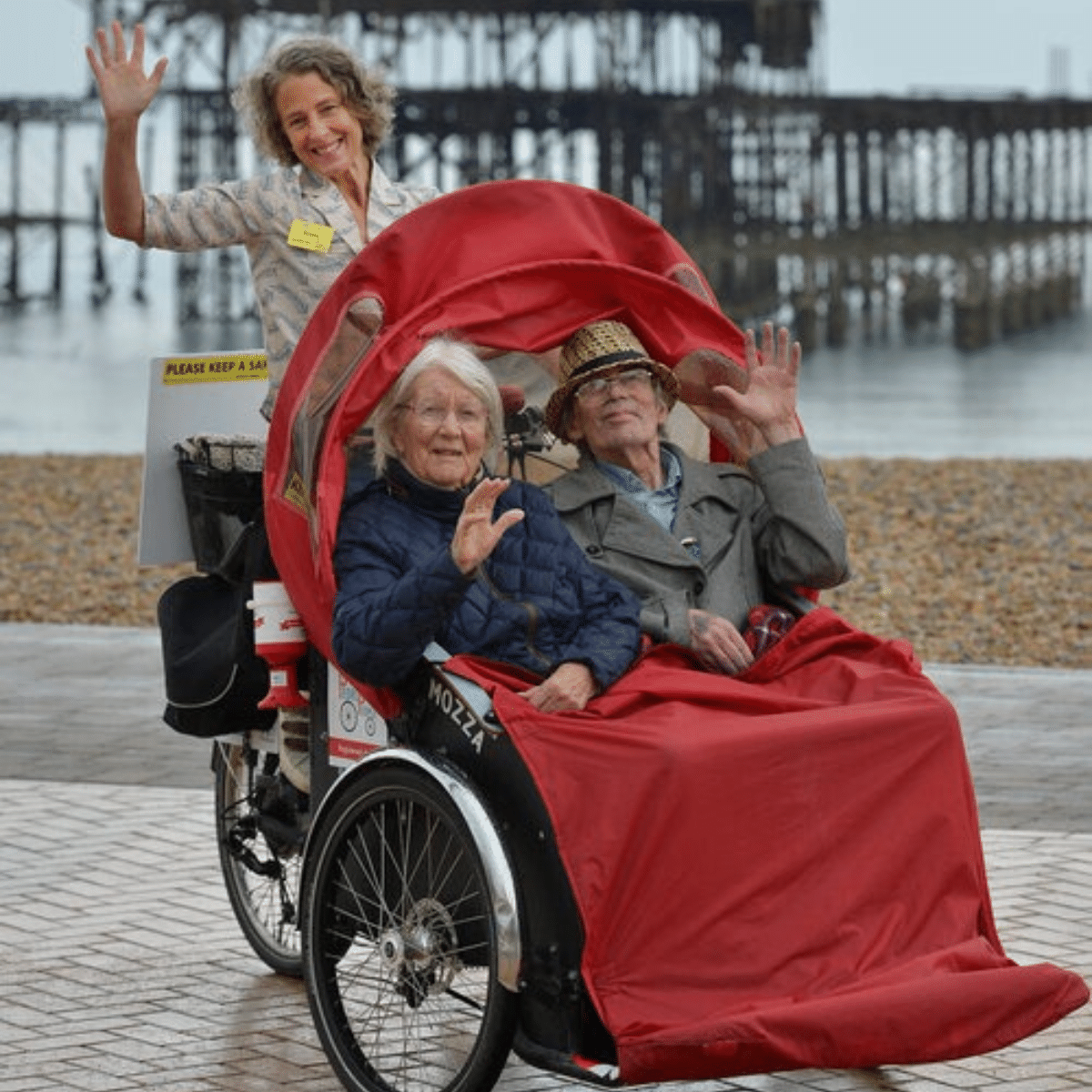
Another project that captured her imagination was Pedal People, which enables people with mobility challenges to enjoy rides along Brighton seafront on specially adapted cycles.
"I'm a massive cyclist myself, so it really touched my heart. The joy of giving people experiences they might not otherwise be able to have."
Looking ahead
As renewable energy projects continue to grow, Katy believes businesses have an increasingly important role to play in supporting communities.
"Community benefit is no longer a nice-to-have. It's becoming an absolutely critical part of developing projects."
But she believes the key to meaningful giving is listening.
"Communities know what they need. They have amazing ideas, energy and commitment. Sometimes they just need a little extra support."
For businesses considering local giving, her advice is simple:
"It's amazing what small groups can do with relatively small amounts of funding. Give people the resources to make things happen, and they'll do fantastic things."
Since 2008, the Little Cheyne Court Wind Farm Fund and the Rampion Community Benefit Fund have awarded more than £3.5 million to support communities across Sussex. Find out more about the funds here.