Philanthropy 2023 - New UKCF Report

UK donors and communities are determined to drive philanthropy forwards to tackle the root causes of social inequity and climate change in the face of today’s financial turmoil, according to a new report published by UKCF.

UK Community Foundations (UKCF) has published its annual report, ‘Philanthropy 2023’ which highlights the determination of UK communities to overcome the financial crisis and the root causes of social inequity through local philanthropic action.

Increasingly, individuals and households are finding themselves in need of support from charities and funders – some for the first time in their lives. Philanthropy 2023 looks into the root causes of the rise in demand for frontline services and the barriers that charities themselves are having to fight through to provide the necessary support.

Continual financial inequalities and affected mental health from the Covid pandemic are some of the issues highlighted in the report as having led to the increase in demand for local charitable services in 2023. It goes on to note that, according to a survey conducted by the National Council for Voluntary Organisations (NCVO), one in five charities are having to reconsider keeping their vital services open due to their own financial difficulties. At Sussex Community Foundation, we are seeing the reality of these closures on the ground.

Together, UKCF members have distributed over £170.6 million – 40,804 grants – to charities and voluntary organisations in the financial year 2022-2023. Regional insights show that, while the resilience of community-focused organisations has not faded, there is still so much to be done to improve social equity at a local level.

"The predicted impact of charity closures will no doubt affect our underrepresented and minoritised communities the hardest – something we cannot let happen. As a sector, we must ensure these vital services continue to be there for everyone who needs them.”

Rosemary Macdonald
-
CEO, UKCF

Rosemary Macdonald, CEO at UKCF, said:

“Recent times have been demanding for all charities. Covid, followed by the financial crisis, has seen the necessity for charities continue to rise while local charity provisions have been forced to shrink. The predicted impact of charity closures will no doubt affect our underrepresented and minoritised communities the hardest – something we cannot let happen. As a sector, we must ensure these vital services continue to be there for everyone who needs them.”

The report also refers to the long-term potential of ‘place-based philanthropy’, marking it as ‘a valued addition’ to public services in reducing systemic inequity and improving the quality of life in UK communities. It illustrates the merit of convening different bodies of society; bringing together funders, grassroots community groups, local authorities, corporates, financial services, social enterprises and other decision makers, to develop philanthropic opportunities that explore and tackle areas of inequality and climate change.

The UKCF network is collectively managing over £811 million in endowments, being invested by communities for communities. This has risen by 14% since 2020, showing a drive for more sustainable support at a local level. The report explores the promising landscape of place-based philanthropy, where building community endowments ensures a long-term revenue stream, stating ‘the potential of new philanthropic opportunities by unlocking dormant trusts and assets is huge’.

Supporting communities in regaining resilience for the future is high on the agenda for Sussex Community Foundation. Kevin Richmond, CEO said:

“At Sussex Community Foundation, we’re passionate about the place we live and are relentlessly focused on addressing today’s challenges and building for a better tomorrow. Local community organisations play a crucial role in that change. Through partnerships with people and organisations dedicated to supporting local communities, we gave out £3.2million in funding to support Sussex in 2022-23.”

You can find the Philanthropy 2023 report here.

Read more about people our grants have helped.

Uncovering Sussex: How evidence-based research helps Sussex Community Foundation to tackle poverty

Sussex Community Foundation commissioned our research team at Oxford Consultants for Social Inclusion (OCSI) to produce a Tackling Poverty report, to gain insights into Sussex's poverty levels, continuing the 'Sussex Uncovered' series.

The report establishes a baseline of data about poverty in Sussex, and the Foundation intends to use the evidence gathered in this report to inform their development as a community foundation. 

Methodology

We began our work by analysing and evaluating data under five key themes that emerged from conversations with the Foundation on their key strategic priorities for addressing poverty across Sussex. These are: 

We used our experience in producing Needs Profiles for other Community Foundations and knowledge of the data landscape to identify key metrics to analyse under those themes.

We explored data from a range of sources, including administrative datasets (data which is created or collected when people interact with public services, such as schools, the NHS, the courts or the benefits system, and collated by the government) collected by government departments, such as claimants of means tested benefits and homeless statistical returns. We also explored self-reported survey data from the 2021 Census.

Where possible, data was collected over a five-to-ten-year timeframe to allow exploration of the impacts of wider socio-economic changes and challenges over time, particularly in the context of the pandemic and cost of living crisis. 

We investigated the performance of Sussex’s Local Authorities, major towns, rural areas, and neighbourhoods, and produced our findings as a narrative analysis, supplemented with data visualisations. We used our data mapping and reporting platform, Local Insight, to simplify aggregation of data to the Sussex neighbourhoods and quickly export population statistics for the areas under review.

We chose to use this narrative-driven approach to highlight the trends and issues we discovered in a way that builds an easy to understand story of a local place. This allows stakeholders to see the woods for the trees and aids in gaining a deeper understanding of the issues at hand and how they intersect with each other. 

Findings

We identified four clear challenges faced by Sussex communities in their campaign against poverty.

Challenge 1: An ageing population

Sussex’s population is older than the national average, and the 65+ population is projected to grow by 41.3% between 2020 and 2040. Already, rising social care and poor health burdens are creating challenges for the region’s public health services. The associated fall in the working-age population will likely lead to a reduction in labour market demand and may also increase labour market costs, while the potential loss of salaried employees could reduce disposable incomes and impact on consumer spending.

Challenge 2: High levels of long-term illness and poor outcomes for those with a disability

17.6% of people in Sussex have a disability, compared to 15.6% in the South East and 16.9% in England. There is strong evidence to suggest that people with disabilities across Sussex are more likely to experience material deprivation challenges - alongside the general health challenges associated with long-term illness and disability.

Challenge 3: Inflationary pressures are contributing towards financial hardship

The region is experiencing financial pressures due to the rising costs of living, which is impacting on the availability of affordable housing and the overall cost of essentials. Those in Sussex’s rural and coastal communities are especially vulnerable to the rising costs of energy bills, with 8.2% of homes in those areas found to have had a low energy efficiency rating - more than double the national average (3.3%).

Challenge 4: Multiple deprivation challenges in coastal communities​​

Each of the eight most deprived towns in Sussex is located in coastal communities. These towns face a range of issues, from economic struggles to social welfare concerns.

Stefan Noble
Director and Head of Research, OCSI

January 2024

Help us now on tackling poverty.

Donations are pooled with others in the community to enable impactful grant making in this area. You can make donations of any size and it will make a real difference to people’s lives.

Crawley Open House

They are a valuable resource in the Crawley area to accommodate and support those who have fallen through the cracks.

The hostel residents are offered three meals every day as well as tea, coffee and snacks. For many of them eating properly is a vital part of their rehabilitation. People who are referred or are known to the team are offered food parcels to tide them over their period of crisis. Typically, Crawley Open House gives out between 60 and 70 food parcels per week, and most of what they give out was donated from individuals, companies, retailers, Fareshare and other community groups.

The average length of stay in the hostel is eight or nine weeks, and in that time the residents work closely with the staff to find a more permanent accommodation. Progress is also made on some of the issues which made them homeless in the first place, and the staff aim to create a warm, safe, healthy and supportive environment for them. Many talk about the food as being a highlight!

A member of staff writes: “It is remarkable how much progress many of them make during their stay at Crawley Open House. Many arrive anxious and fearful, and often malnourished and quite unwell, especially if they have come straight from the streets. Having a safe place to be and being able to sleep, eat, shower and enjoy the company of others, means that they can usually find themselves in a far better place, and more able to deal with the next chapter of their life.”

Education Futures Trust

Education Futures Trust provides high quality support and learning tailored to improve the life chances of vulnerable children and adults, particularly in the Hastings area. Their work focuses on building resilience and improving health, especially mental health.

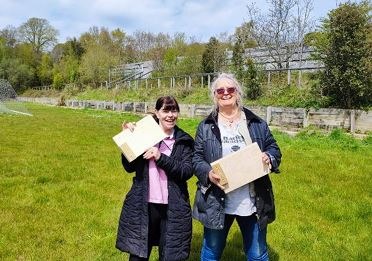
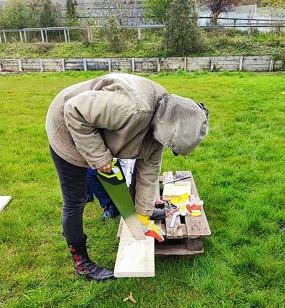
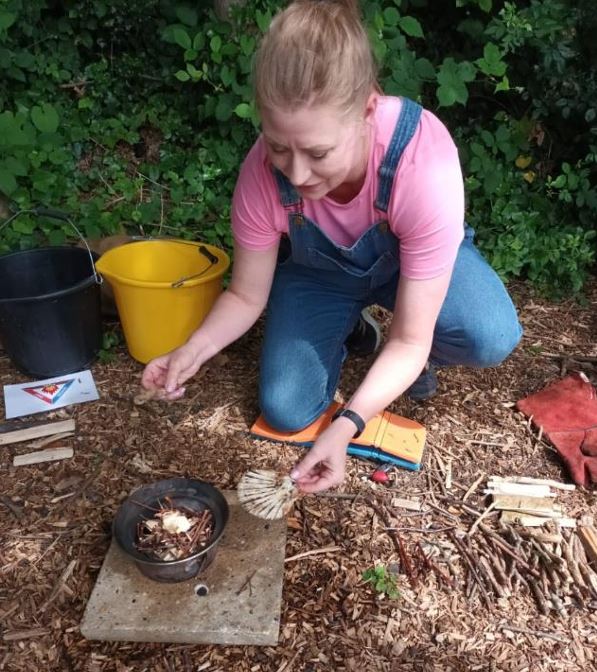
The grant given by the Foundation helped the group deliver a range of courses such as "Bushcraft" and "Women's DIY". The courses, aimed at vulnerable adults, were all based outdoors to highlight the benefits of being outside in contact with nature, and its impact on mental health and wellbeing.

The sessions consisted of a series of exciting, hands-on activities for adults suffering from poor mental health, especially those struggling with leaving their homes and being in unfamiliar places. All participants were encouraged to share their challenges and stories to support each other and develop a shared understanding that they were not alone.

Real Lives - Alice's Story*

Before attending the course, Alice showed a high level of social anxiety, she struggled to leave the house alone and would avoid busy areas. She reported that this started during the Covid pandemic, and had not significantly improved since. After a few attempts by a friend to involve Alice in Education Futures’ courses, she eventually agreed to attend ‘Women's DIY’, and a plan was made to support her to attend.

Initially, her friend walked Alice to the site where she would meet the course leader outside of the building. This was repeated each week. Alice was visibly anxious in the initial session and relied very heavily on the staff there. The following week, when the course leader met her outside, she mentioned that seeing others struggling like her made her feel less anxious, because they would understand and wouldn't think she was odd.

Alice's confidence grew, her participation increased during the course and she also started communicating with others. During a conversation with the course leader, Alice said that she 'wasn't quite there yet but felt better about going outside.'

Alice has attended other courses since then and is now able to attend and enter the building without any support from the staff. She now helps with her own DIY projects at home.

*name has been changed for anonymity

To find out more about this organisation visit
https://www.educationfuturestrust.org/

£100,000 for Lewes Community

Since its inception the Lewes Fund has given grants totalling over £100,000 to more than 40 community groups in Lewes and the surrounding parishes.

“Tonight we are celebrating the contribution these groups and their volunteers make in helping their communities to be more resilient – in particular helping meet the needs of the young, the old, and the disadvantaged in Lewes and surrounding parishes.”

Richard Pearson
-
Chair of the Fund

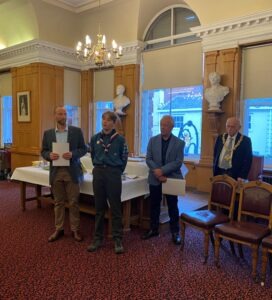
Recipients of Grant Certificates handed out by the Mayor during the evening included: Culture Shift, Homelink, 6th Lewes Scouts, Lewes House Gardening group, Moving Sounds, the Men’s Shed, the Local Repair Cafe and Patina, Moving on Parade.

The Lewes Fund was established in 2012 to help facilitate charitable giving, and to act as a fund raiser for local groups. It is supported by Sussex  Community Foundation.

Groups seeking funding and those wishing to support the Fund can find out more here. 

6th Lewes Scouts received £1,500 from the Lewes Fund to improve their scout hut

Cover photo shows Lewes Mayor Stephen Caitlin and Richard Pearson, Chair of The Lewes Fund, with Keith Ellis and Mike Potter of Moving Sounds.