Sussex Professional Advisers – We need you!

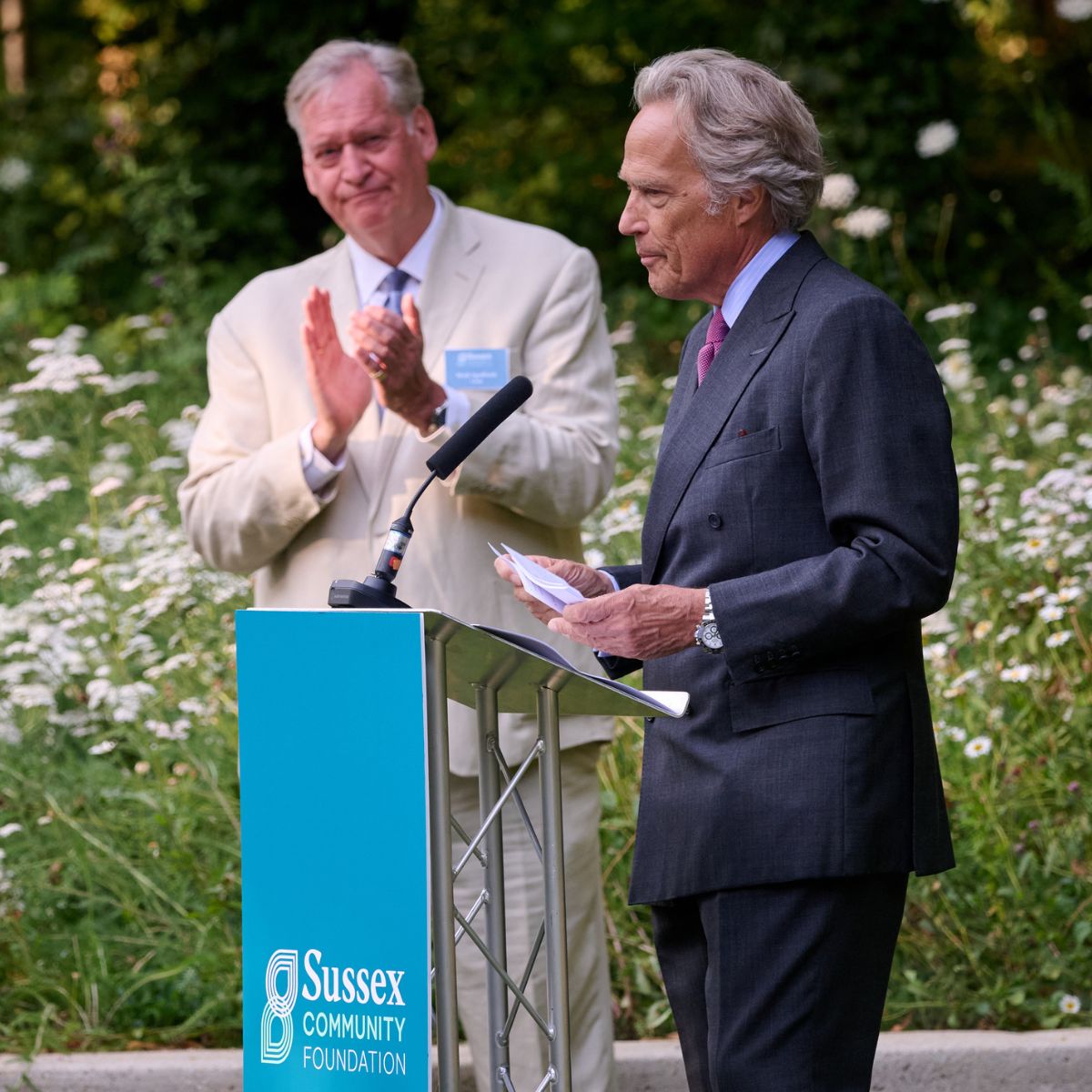
In this personal reflection, Martin Roberts, Trustee of Sussex Community Foundation, shares how his understanding of Sussex has grown over the past eight years, and why professional advisers have such an important role to play in connecting their clients with opportunities to support local communities.

10 years ago today, I was a partner with a large city law firm, commuting to London every day from Haywards Heath station (no working from home then!).

Although I had lived in the county for over 20 years, I knew very little about Sussex or the needs of its residents. I had no idea that Sussex includes 48 neighbourhoods which are in the 10% most deprived areas in England and which are home for 80,000 people.

For the last eight years I have been lucky enough to work alongside some fantastic people as a trustee of Sussex Community Foundation. I have been amazed by the work which the Foundation has done and continues to do to support the small Sussex charities and community groups which so vitally need our help.

The vital role of professional advisers

I have also seen just how much our Professional Adviser network has done and continues to do to connect us with possible future fundholders and donors.

Around 30% of our fundholders have been introduced to us by lawyers, accountants, wealth managers and financial planners.

As Professional Advisers, you have the unique privilege to talk to your clients about possible charitable giving and to offer your expert advice on the best route for them to achieve their personal objectives as part of their tax and estate planning strategy.

For those clients who have a Sussex connection and are in the fortunate position to give something back to the community in which they grew up or have lived for many years, Sussex Community Foundation could well be the answer.

Of course, many of you already know this and are good enough to mention the Foundation and point some of your clients in our direction.

Connecting local generosity with local need

For those who don’t know much about us, the Foundation is the largest grant making charity dedicated to Sussex.

We have £26 million under management (in our endowment fund) and over 100 family and corporate funds. We can connect local generosity with genuine need. We give an average of £2.5 million each year to over 300 Sussex based organisations, most of which are small, low profile and which your clients would quite probably have never heard of.

These organisations deal with a huge range of issues, from mental and physical health to social isolation and homelessness, from housing and the environment to youth clubs, older people’s lunch clubs, clothing recycling and food banks, from art and wellbeing clubs, sports and dance groups for those with disabilities to advice centres for those in need of help with energy bills or debt and much, much more.

We can suggest countless charities and community groups which do amazing work in the community, often with very limited resources. We can almost certainly identify groups operating in areas of need that match the specific interests or location of your clients.

Experience, knowledge and a practical way to give

We have 20 years’ experience of working in Sussex and have made grants totalling £40 million during that time. Our staff have a deep knowledge of the needs of Sussex people and the organisations which work tirelessly to meet them.

Setting up a Donor Advised Fund with the Foundation keeps your clients and their families at the heart of the decision making process, whilst also representing a low maintenance, low cost and tax efficient means of giving and putting something back into the community.

You can do more than you might think!

We are massively grateful the many of you who already include the Foundation in your thinking for clients who express an interest in supporting local causes. We really do need you!

As I come to the end of my time with the Foundation, may I urge all of you to continue to mention us to any of your clients who are looking to support Sussex based charities or community groups. We might not be the right vehicle for all of them, but we can offer objective guidance and would love to help you to help your clients where we can.

Whatever the outcome, we always welcome the opportunity to explain what we can offer.

Finally, to the many of you I have been fortunate to meet over the last few years, my very best wishes to you and your firms for the future.

To all of you, please carry on thinking of Sussex Community Foundation. It is a brilliant charity run by an amazing team of people.

20 Years, 20 Voices: Carina Bauer

20 Years, 20 Voices celebrates the people, charities, donors and partners who have helped shape Sussex Community Foundation over the past two decades.

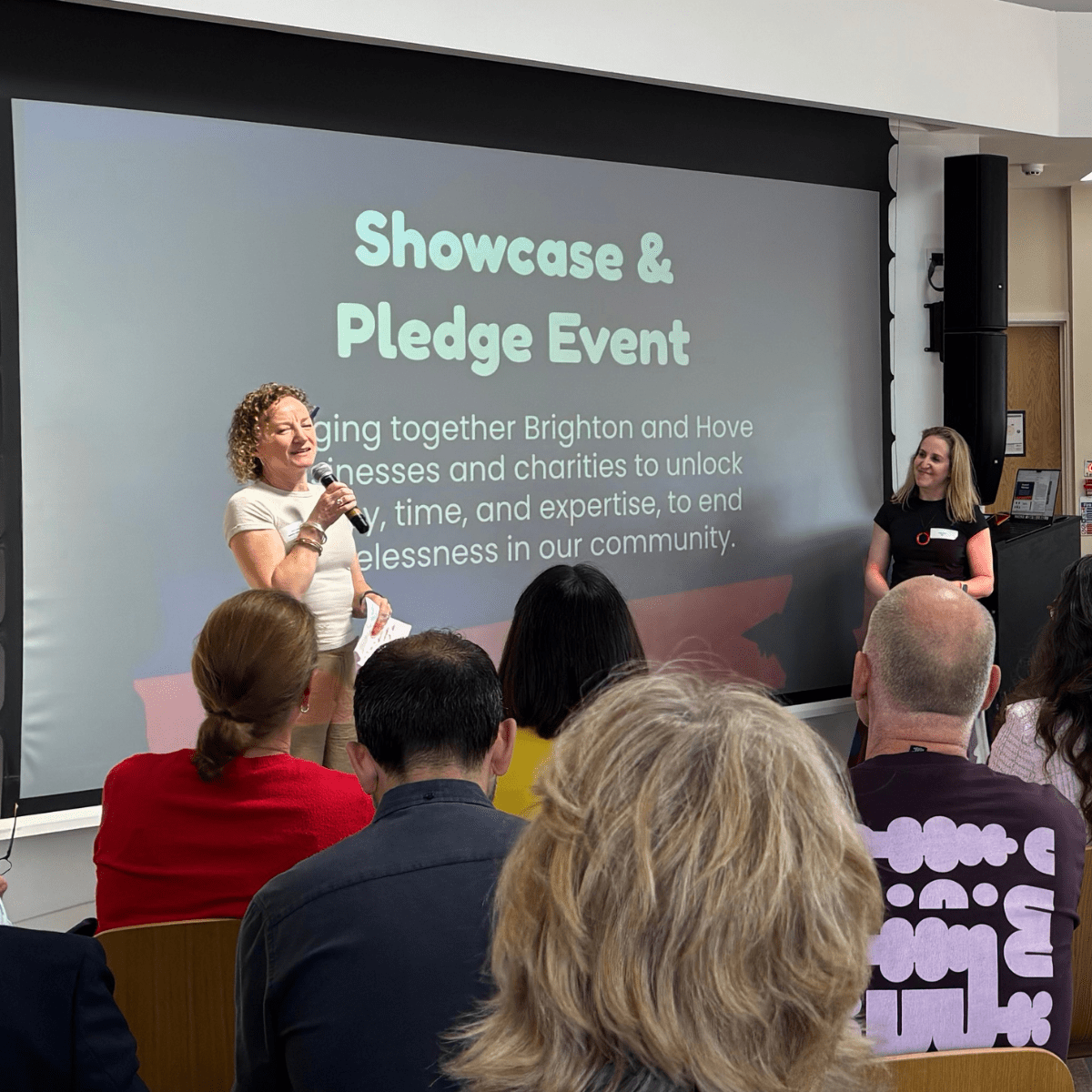
Carina Bauer, CEO of IMEX Group, established the Brighton & Hove Homelessness Fund at the Foundation in 2020, bringing together businesses, charities and local partners to tackle homelessness in a more strategic and collaborative way.

From funding research and strengthening partnerships to investing in projects that prevent homelessness and help people rebuild their lives, the fund has demonstrated the power of local philanthropy.

Focussing on homelessness

Carina Bauer and her colleagues at IMEX knew from the beginning they wanted to focus on supporting people experiencing homelessness in Brighton & Hove.

"We saw the problem of homelessness growing in the city," Carina says. “And we were already supporting charities like The Clock Tower Sanctuary, so we approached them to say, what could we do that's a bit more strategic?"

That conversation led to the creation of the Brighton & Hove Homelessness Fund.

"At the beginning, we offered to fund a project that brought together all the local research that had been done in different places," she explains.

The findings highlighted several priorities for the sector, including strengthening the Homelessness & Rough Sleeping Network (HRSN), which helps charities collaborate more effectively across Brighton & Hove.

"For us, that made complete sense," Carina says. "Our business is about bringing people together. We know collaboration works.”

Funding change

The research shaped the fund's approach, focusing investment on projects that could create lasting change rather than immediate crisis support alone.

"We decided we wanted to fund projects at two ends of the funnel - either preventative, stopping people from becoming homeless, or to help people get out of homelessness," she says.

Carina reveals that the most impactful work isn't always the most visible.

"Sometimes it's about research and data. Sometimes it's about planning a funding application for possible new homes, or a network. We put our funding into the types of projects which have more long-term aims."

A partnership built on trust

Carina credits Sussex Community Foundation with making the Brighton & Hove Homelessness Fund both practical and flexible.

"We had a good referral because it was somebody we trusted at the Council," she says. "I like the fact that the Foundation can be very flexible with the fund. We can shape the priorities we care about and stay involved in decisions, but we don't have to manage the administration, due diligence and impact measurement."

"I never wanted it to be a fund about IMEX and our business," Carina explains. "The longer-term idea is a fund that is self-perpetuating through multiple donors of people and businesses who are interested in supporting homelessness charities in the city."

Small changes that create lasting impact

One recent highlight came at a partnership event where charities shared the impact of projects supported by the fund.

"When you look at the big picture, the statistics are so big and the issues are so complex," she says. "But then you fund a programme like SPARC delivered by Brighton Housing Trust, and you've helped eight people who’ve experienced homelessness get apprenticeships and develop their skills. It seems like a small number, but for those eight people, that's life changing."

The role businesses can play

Carina believes investing in local communities is a responsibility for businesses.

"I think it's a fundamental responsibility. If you are a business, you should invest back into the community where you're based."

She sees it as part of a long tradition of businesses contributing to the places where they operate.

"If you look at the businesses of old – Cadbury, Bournville, Rowntree, Wedgwood – all these old British businesses who built communities and built fantastic lives for the communities where their factories were."

Carina also wants businesses to know that giving locally is more accessible than many people realise.

"People sometimes assume you need to give hundreds of thousands of pounds to set up a fund, but that's not the case. Choose an issue you care about and start. Or join an existing fund if that makes more sense. You don't have to create something from scratch to make a real difference."

Looking ahead

Looking ahead, Carina hopes the fund will attract a more diverse group of supporters.

"I'd like us to attract a diversified group of funders, so that we can increase the amount in the fund," she says.

But it's about more than raising money. She hopes to build stronger links between businesses and charities, with companies sharing skills and expertise as well as funding.

"I think there are a lot of great people and businesses in Brighton that would like to do more for their community," she says. "It's just how do we match them and really get them working."

For Carina, the key is commitment.

"The effort for small and large charities to fundraise year to year, day to day, is enormous. If you can give some certainty to a charity, it means that they can do better work."

Her advice to anyone thinking about giving is simple:

"If you want to really make a difference in an area, you've got to do it over the long term. Pick your area and commit to it for a few years, rather than chopping and changing every year."

What modern philanthropy tells us – and why it matters here in Sussex

The latest research from The Beacon Collaborative and Barclays Private Bank makes for really interesting reading – shining some light (and some hard data!) on how people with significant resources are choosing to give, what motivates them, and what kind of support they need to maximise the impact of their giving.

Giving is growing - but donors want clarity and confidence

The research backs up what those of us in the philanthropy sector already know – there is a huge amount of generosity in our country, with 93% of the UK’s wealthiest individuals already giving to charity and contributing an estimated £11.4 billion in 2024. Yet the research also shows that many of these donors lack access to trusted, knowledgeable advice on how to give effectively and efficiently. For us at Sussex Community Foundation, this reinforces something we hear often: people want to help, but they don’t always know where their support will make the biggest difference.

Supporting philanthropy in Sussex

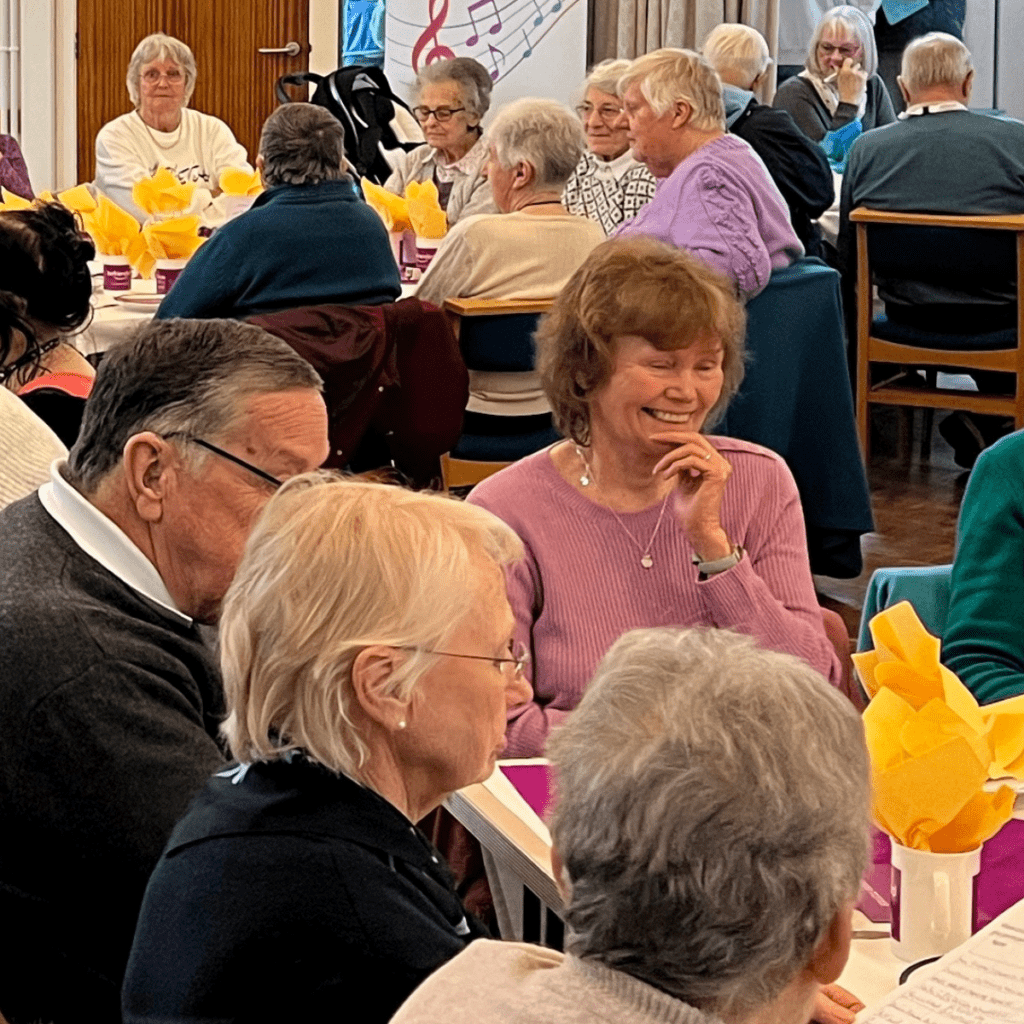
Here in Sussex, we’re proud to play a role as a local philanthropic partner. We help donors give with confidence that their resources are reaching grassroots organisations that are doing vital work – whether they are local food banks, mentoring for disadvantaged young people, singing groups which combat loneliness for older people, or providing vital support for disabled adults. We are in constant dialogue with people running local community groups, gathering insights to share with donors, so their giving is purposeful, not just well-intentioned. And we use the latest data, like our Sussex Uncovered reports, to highlight where the need is greatest.  

The role of professional advisors

Recent research from CAF, The Philanthropy Advantage, also shows that up to two-thirds of high-net-worth (HNW) giving happens without financial advice, and only around a third of HNW donors have talked about the tax efficiency of their giving in the past two years. This suggests that a significant portion of charitable giving could be even more effective with the right guidance.

Advisors play a crucial role. 81% of wealthy donors believe professional advisors should proactively raise philanthropy as part of wider financial planning. It’s encouraging to see this recognised, because values-led giving isn’t separate from the decisions people make about their wealth – it’s often central to them.

That’s why the Foundation invests so much time in working with financial planners, solicitors and accountants across Sussex. We help advisors introduce their clients to meaningful, place-based giving opportunities, whether that’s through a legacy, a Donor Advised Fund, or long-term endowment giving. Over the last few years, we’ve seen this network grow significantly. Advisors tell us they value having a trusted, local partner they can turn to, and donors tell us they value the opportunity to invest in the place they call home.

A hopeful future for giving

The most hopeful message in the research is this: people want their giving to be more thoughtful, more strategic and more connected to their values. And they are looking for guidance. That presents a huge opportunity, not just for donors and advisors, but for communities across Sussex.

Connecting people and place

At the Foundation, we’ll continue to bring inspirational people together to create the change Sussex needs. If you’re an advisor who’d like to understand more about how we can support your conversations with clients, we’d love to speak with you. The more we connect people who want to help with the organisations delivering real change, the stronger our county becomes.

Legacy giving: leaving a lasting impact through your Will

Gina Berry, Head of Private Client Department at The Owen Kenny Partnership Ltd, discusses the lasting impact of legacy giving.

At The Owen Kenny Partnership, we work closely with clients to ensure their wishes are clearly and securely reflected in their Wills and wider estate planning. One topic we always encourage clients to consider is legacy giving. Leaving a charitable gift in a person’s Will offers a deeply personal and rewarding way to create a meaningful legacy, one that extends beyond their family and supports causes they care about.

When we raise the idea of charitable giving, many clients instinctively think of the large national charities, such as the RNLI and British Heart Foundation. While these organisations do remarkable work, some people feel their individual contribution may be lost in the scale of such operations. Others are put off by the idea of their gift being absorbed into a vast system, rather than making a clearly visible difference.

Encouraging clients to think local

This is why we encourage clients to think more locally. Smaller community-based charities, often right on their doorstep, can be profoundly affected by even modest legacy gifts. Supporting local causes not only strengthens the fabric of our communities but can also provide the donor's family with a tangible insight into the benefit their loved one’s legacy has made. It’s incredibly powerful for future generations to see the real-world impact of that generosity, whether it’s a community garden thriving, local young people being mentored, or a village hall being kept open.

There are also clear practical benefits to including charitable legacies in a Will. Gifts to UK registered charities are exempt from Inheritance Tax. This means that not only can a charitable gift reduce the overall taxable value of an estate, but in some cases, it may even bring the estate below the taxable threshold or reduce the rate of Inheritance Tax from 40% to 36% if 10% or more of the estate is left to charity. It’s a way to support causes close to your heart while also making your estate planning more efficient.

A question I always ask is whether the client would prefer their money to go towards paying an Inheritance Tax bill or whether it could be used to support a charity close to their heart.

Sussex Community Foundation plays an invaluable role in helping clients connect with the full range of charitable work happening locally. Whether someone already has a particular cause in mind, such as mental health, homelessness, youth work, or the environment, or simply wants to ensure their gift is used where it's needed most, the Foundation offers expert guidance and long-term stewardship. They also help clients set up Donor Advised Funds to support existing local projects, ensuring that their generosity lives on for years to come.

As solicitors, we are in a privileged position to help guide and shape these conversations. By partnering with Sussex Community Foundation, we can offer clients both clarity and confidence, helping them ensure their legacy reflects their values and makes a lasting difference in the communities that matter most to them.

Gina Berry, Head of Private Client Department

The Owen Kenny Partnership Ltd

A day in the life of a small charity

Suzanne Procter, Principal at Dementia Singing Experience Sussex, gives us a unique glimpse into their mission as a small charity, what a typical day is like for her and her team, and the difference they're making for those affected by dementia and their carers.

Who are Dementia Singing Experience Sussex (DSES)?

We take structured and interactive singing, activity and craft sessions into community day care centres and care homes, supporting those living with dementia and offering respite opportunities for carers. From very small beginnings as a not-for-profit organisation back in 2014, we have expanded from one session per week to at least 30 sessions per month. We have also been a registered charity since 2019.

How long have you been with DSES?

I have been working with the charity for coming up to 10 years. I became involved with DSES after experiencing the decline of my Auntie, who was living with dementia from the age of 64. She used to love it when I would visit and sing songs to her, she would come alive and become the Auntie that I always remembered. This really struck a chord with me. As a performer I realised that maybe there was something I could be doing to help those living with this dreadful condition.

What’s a typical day like for you and your team?

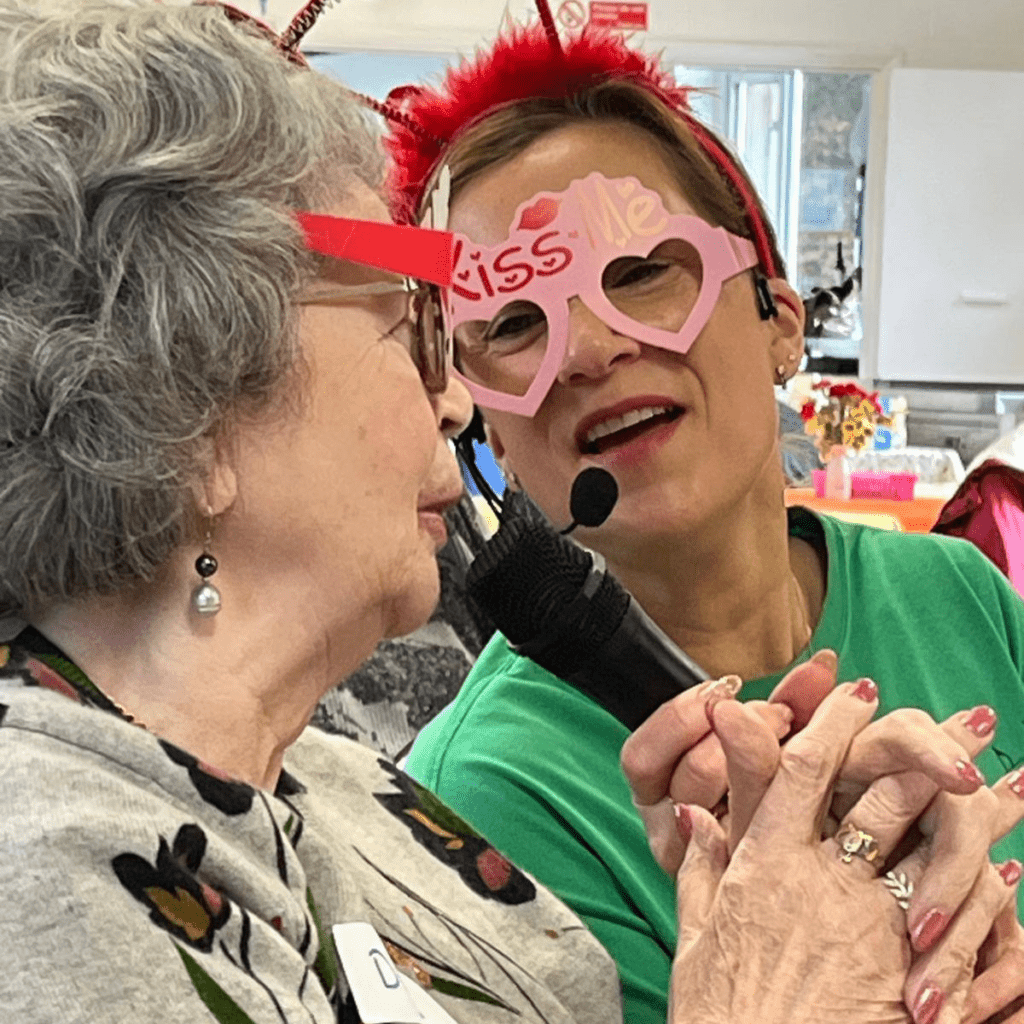
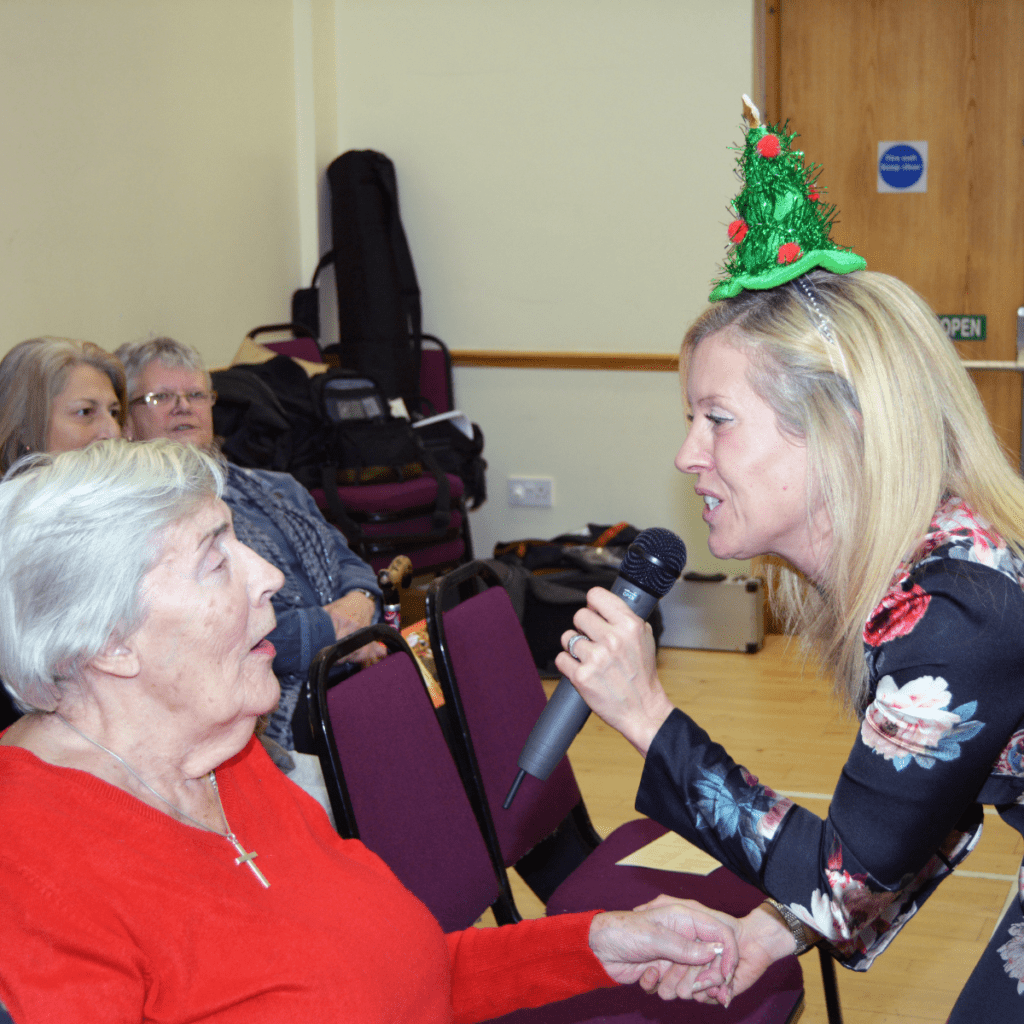
A typical day at DSES involves gathering all props, costumes and a speaker and heading out to one of our care homes/centres to lead an hour session in the morning and another hour in the afternoon. We arrive, set everything up and introduce ourselves to everyone in the room. It's important we make sure we know the names of every client to make the experience more personal. During the sessions, we use fun props, crazy costumes and make sure we keep everyone moving and as active as they possibly can for the full hour. 

Can you share a story of how your charity has directly impacted someone's life?

The most wonderful part of our sessions is when a client arrives silent, unresponsive with their heads down and eyes closed, and they leave awake, smiling, talking, laughing and still tapping their feet along to the music they have just heard. It can be a challenge working with those clients who are towards the end of their dementia journey, but we do include everyone as much as we can whatever their condition.

Recently, one of the clients, who hadn’t spoken for three months, attended his first session with us. He arrived asleep but, as our session progressed, he began tapping his feet, singing and even dancing. It was a joy to behold! His wife, who was visiting at the time, was in tears, as were we!

What are the challenges you face, being a small organisation?

As a small charity, one of the challenges we face is securing funding. It is a constant battle but one we attempt to remain positive about. 

What impact do you feel you have in the wider community?

Our charity is unique because we interact with everyone, we learn everyone’s names and make sure that no-one is left out. We don’t just stand at the front and sing, we engage and communicate, trying to share our positivity not just with the clients, but the staff too. It is like one huge family!

Dementia Singing Experience Sussex brings interactive singing and craft sessions into day care centres and care homes across Sussex, supporting those living with dementia and their carers. Find out more about the work they do on their website.

Dementia Singing Experience Sussex recently received a grant from the Foundation under the Improving Health funding priority.

The gender dynamics of wealth transfer and philanthropy

Michael Lawrence, Managing Director at Global Wealthmap Ltd, discusses women’s increasingly important role in charitable giving.

We often hear about the inter-generational wealth transfer, where the baby boomer generation are going to be shifting trillions of pounds of wealth to the next generation. However, before this we will witness a significant transfer of wealth from men to women.

It is well established that women tend to outlive men, and whilst on average this may only be by a couple of years, in certain couples this could be a five- or ten-year period, partly due to the husband being on average a few years older as well. Add to this the increasing divorce rate in couples in their sixties.

This will have a number of ramifications for society, and especially so for professional services. At a recent event where I met with the FCA it was mentioned that upwards of 70% of women change their financial adviser when they become widows.

Helping manage their wealth

In our experience, women who inherit wealth will typically leave a traditional wealth manager for a planning led proposition, valuing in-depth conversations about goals, family priorities, passing wealth on to the next generation and charitable goals. If a firm has traditionally put too much emphasis on investment performance, graphs and asset allocation, and less on the qualitative side of the relationship, this can be a real issue.

We know that financial security and long-term financial stability are two big drivers for women inheriting money, and this may in turn lead to a desire to have a more cautious overall outlook. This is a generalisation of course, but we do see higher savings rates for women rather than men in our wider practice.

There is an increasing need for professional service and private client practices to take onboard demographic changes, because it is not just at the inheritance stage women become the main decision-makers. It is now increasingly common to see that the main income earner in the household is female. This follows on from a very long-term trend of academic outperformance of girls at school, young women at university and as a result women in the workplace. Some studies suggest that 60% of all wealth in the UK will be in the hands of women by 2030.

There are still big areas of inequality that need to be addressed, but increasingly we see couples coming to us where it is the woman who earns more and generates more wealth, and as a result takes a bigger interest in how money is managed for the longer-term.

This is in turn creates a number of opportunities in private client work. Of course, all types of advisers can be equally effective in advising all types of clients. But it is essential to focus on goals and objectives, and work through genuine lifestyle financial planning processes. This involves talking far more about the person and far less about the money.

Whilst the gender dynamics of wealth transfer introduces a number of new considerations, the old truths still remain. Clients value trusted advisers and you do that through being genuinely client centric, through transparency and great communication skills.

A positive effect of women making the financial decisions of a household, or where a widow suddenly becomes responsible for their finances, is a desire to talk about the importance of the wider family and the wider society. This introduces a great opportunity for private client advisers to address charitable and philanthropic goals as an active conversation rather than an afterthought.

A valuable opportunity for our society

We are in an exciting phase of change for our society, with increasing financial participation and autonomy for women we have a genuine chance of achieving a more equal society for everyone.

Michael Lawrence APFS
Chartered Financial Planner
Managing Director

Interested in finding out more on this topic? You can read a related article here.

100 Days in: what I’ve learned as Head of Philanthropy at Sussex Community Foundation 

When I saw the role of Head of Philanthropy at Sussex Community Foundation being advertised, I’ll admit - despite working for over 20 years with small charities and non-profits, I didn’t really know what a Community Foundation was. I certainly didn’t know the huge impact they have. But I do now. 

In just 100 days, I’ve been blown away by the powerful work happening at a very local level - work that is often unseen but completely vital. Community Foundations like ours are uniquely placed to connect those who want to give with the local charities who are working tirelessly to support our communities. And Sussex Community Foundation is doing that every single day. 

Over these past few months, I’ve had the privilege of meeting some of our existing fundholders as well as individuals who are intending to set up new funds with us in the future. These are people who care deeply about Sussex and the issues that exist on their doorsteps. They want to make a meaningful difference in their communities - and working with the Foundation allows them to do that in a structured and informed way. Our recent event held at the House of Lords was a fabulous opportunity to have many of these people in a room together and celebrate the impact of their charitable giving.   

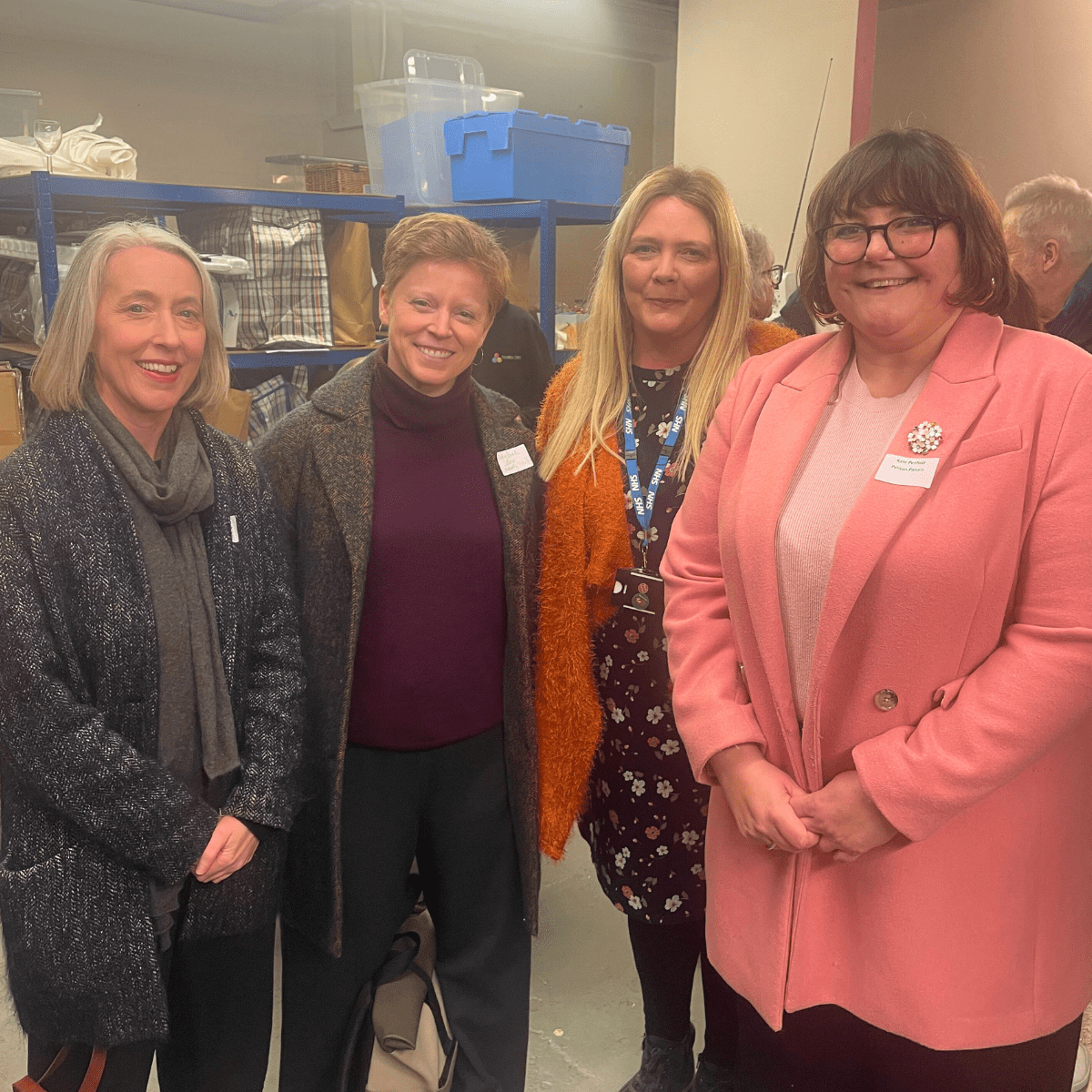
I’ve also been out meeting some of the small local charities we support, including Pelican Parcels (pictured), to see the essential services they provide for some of the most vulnerable people across Sussex. Hearing their stories, understanding their challenges, and seeing their impact first hand has been one of the most meaningful parts of my experience so far. As a former CEO of a small charity myself, I really appreciate how difficult it can be to balance the frontline work with the fundraising necessary to keep going. I’m delighted to be playing a part in encouraging local charitable giving so that these organisations receive the support they desperately need.

I’ve also had the chance to connect with key local stakeholders, such as the MP for Lewes, James MacCleary, and Cllr Lesley Boniface to talk about how we’re supporting the voluntary sector in the area. These conversations reinforce the importance of our role in building bridges between donors, charities, and local government – which is more important than ever in the context of changing local government structures in Sussex.  

Another highlight of the past 100 days was an awayday hosted by the London Community Foundation, where I joined colleagues from five other Community Foundations to share best practice and fresh ideas. The UK Community Foundations network consists of 47 Foundations spanning the whole country, collectively making us the fourth largest funder in the UK. This local expertise combined with national impact is truly awesome, and I’m looking forward to more collaboration opportunities with my colleagues across the network.  

And at the heart of all of this? Relationships. Whether it’s with donors, grantees, colleagues, partners, or other Community Foundations, this role is all about making connections. I feel incredibly fortunate to be working with such a brilliant and committed team at Sussex Community Foundation. Every person here brings heart and dedication to what they do, and I’ve loved getting to know them. 

Looking ahead, the next few months bring exciting opportunities as we do some fresh thinking around our grant-making and introduce new systems to support our work right across the organisation. Despite all the current economic challenges, it feels like we’re at a moment of growth and momentum - and I’m thrilled to be part of it. 

Meet our fundholders: Jeremy Field OBE, C.P.J. Field

In this blog, we meet one of our fundholders who has supported us through the years. Jeremy Field OBE, Co-Chief Executive at C.P.J. Field, writes about his experience as a fundholder at the Foundation.

My family has owned and managed C.P.J. Field funeral directors for 10 generations since 1690. We have always believed in playing an active role in our local community, and both my parents were very active supporters of charities. My mother, Christine, was a district and county councillor and deputy leader of West Sussex County Council. My father, Colin, was High Sheriff of in March 2008 and was subsequently made a Deputy Lieutenant.

In these roles my parents were involved in the formation of Sussex Community Foundation, attracted by the Foundation’s mission to be a lasting resource for local charities.

They were also keen to involve us, their children (Charlie, Emily and myself), in the Fund as the next generation of Fields who now run the business.

By becoming a fundholder and setting up a family endowment fund back in 2008, my family wanted to demonstrate our company’s lasting commitment to Sussex, as well as supporting inspiring local charities. Match funding from the Government’s Grassroots Endowment Challenge was an added incentive.

Over the years, the Field Family Fund has given out 44 grants across Sussex of over £138,000, and the capital is still worth £210,000.

Aims and objectives of the fund

Through our fund we aim to provide support for:

Image from Sussex Support Service to show projects supported by our donors
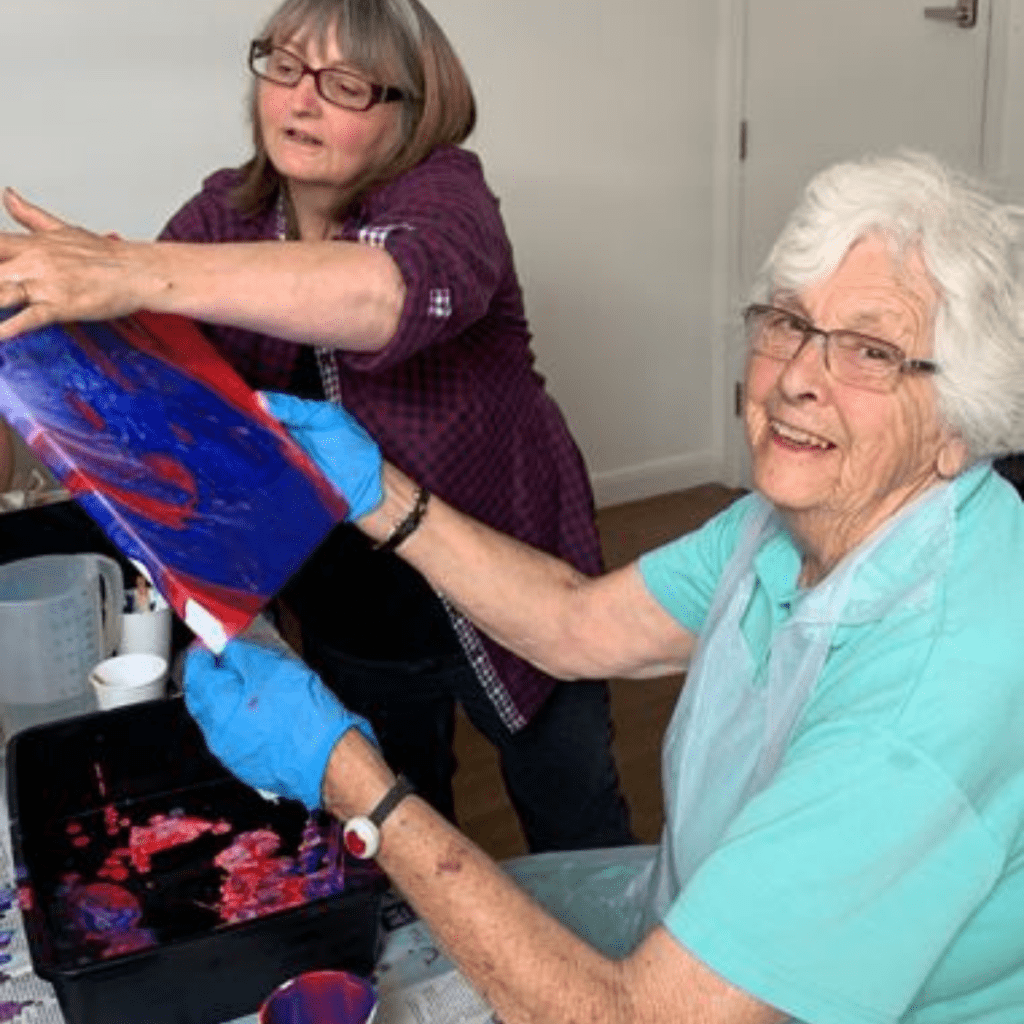
Art workshop at Sussex Support Service

We’ve been so fortunate to support local groups and charities that we might not have been aware of had it not been for Sussex Community Foundation’s grant process. The structure offered by the Foundation means that our funds are working harder. In the long term they can be used to support more great causes than would have been possible if we’d simply given the money directly to local groups. 

As fundholders, our continuing aspiration is to add to the fund when we can, securing this as a channel for our family’s philanthropic efforts in the communities where we live and work for many years to come.

Jeremy Field OBE, Co-Chief Executive at C.P.J. Field

Visit their website here

Read the story from one of the groups we support through the Field Family Fund:

Befriended

Image courtesy of befriended

Find out more about charitable giving with Sussex Community Foundation or contact our Philanthropy team for an informal chat.

Education in Sussex and why we need the charity sector

In September 2024 we launched Reaching Potential, our latest report in the Sussex Uncovered series. These reports give a broad picture of the facts across Sussex around our different funding priorities.

The Reaching Potential report highlights the challenges faced by communities in Sussex, compared to the regional and national picture. It specifically focuses on some of the issues preventing people – especially young people – from achieving their full potential and features some of the charities and groups we support who work in this area.

In the Reaching Potential report we identified three critical areas:

Education attainment and participation

Pupils in Sussex perform below national averages at Key Stage 2, with 11 of 13 Local Authorities showing lower attainment in reading, writing, and maths. Eastbourne records the poorest performance, with fewer than half meeting expected standards. At GCSE stage Sussex also underperforms, against the South East and national averages, with Hastings showing the weakest outcomes. Crawley, Arun, Eastbourne and Rother similarly fall short across key metrics, including GCSE grades and attainment scores.

Further education and apprenticeships

Apprenticeship participation and achievement rates for under-19s in Sussex are below the South East and national averages. Additionally, young people aged 19-24 are less likely to engage in apprenticeships, community learning, or further education compared to their peers across England.

Pupil absences

There is a clear link between absence and attainment. Persistent absence increased significantly post-Covid but slightly improved from 2021/22 to 2022/23. Secondary schools face higher persistent absence rates, particularly among girls in Brighton & Hove, while boys are more likely to be persistently absent at primary school.

A graph showing peaks of school absences since 2018/2019

"Without this programme I would be a lot less aspirational. I think it has made such a big difference it’s hard to put into words. They helped me look at life in a more holistic, authentic way - not just academic. Sometimes things happen that are beyond your control. Being able to respond positively to those changes is what matters. The biggest thing is breaking that wall between what I thought I needed to be like to do these."

Student at Villiers Park

Read the full case study from Villiers Park.

Educational inequalities and disadvantaged groups

The report highlights disparities for pupils with Special Educational Needs (SEN) and other disadvantaged groups.

Pupils with SEN

Sussex has a higher proportion of pupils with SEN than regional and national averages, particularly in Speech, Language, and Communication needs. Educational outcomes for SEN pupils in Sussex are below national standards, with boys performing worse than girls.

A table listing types of SEND needs

 "J is a young person with SEN who has struggled in recent times with mental health issues. To help address these challenges, J joined Amaze as a volunteer to help run the peer support sessions. J’s mental wellbeing began to improve and through this voluntary work discovered he had a talent for youth work and the advocacy of young people with SEN."

Member of staff, Amaze Sussex

Continue reading J's story from Amaze.

Disadvantaged communities

Children eligible for Free School Meals (FSM), non-English speakers, and young carers face significant educational barriers. Sussex has a higher proportion of Children in Need than England, with Brighton & Hove having the highest rates. Parental mental health issues are the leading reason for Children in Need assessments, often linked to higher persistent absences, exclusions, and suspensions. FSM-eligible pupils perform below South East and national averages at both Key Stages 2 and GCSE.

Language barriers

Sussex has a higher proportion of non-English speakers than the South East, although lower than the national average. Crawley has the highest rates of pupils with a first language other than English, exceeding the national average, and these pupils tend to perform worse at Key Stage 2 and GCSE stage than their peers in the South East or nationally.

Employment and jobs opportunities

Employment challenges in Sussex stem from poor transport links and a lack of large urban centres. East Sussex has lower job density (60.74 jobs per 100 working-age population versus 77.86 for England) and longer travel times to large employment centres (39 minutes compared to England’s 16 minutes). Hastings has the second-lowest job density in Sussex and the longest travel time to major employment hubs (55 minutes).

Small businesses dominate East Sussex, with fewer large employers compared to the South East and England. Horsham, Rother and Wealden have the highest proportion of small businesses, while Crawley has the highest proportion of large businesses.

Adult skills and employment

Unemployment rates are higher among those with no or low qualifications. Crawley and Hastings have the highest unemployment among individuals with no qualifications, and Brighton & Hove has the highest unemployment rates across all skill levels.

"Coming to People Matter made a huge contribution to my newfound confidence. I became excited about looking for work and about the future, because they were so helpful and made the most daunting, seem easier, with supportive and helpful discussions, and I was able to engage with someone on my own level."

A beneficiary at People Matter Trust

Read the full story from People Matter Trust.

See more of our case studies or watch our Reaching Potential video below:

How can you help?

Although the findings of the report might seem grim, we know it’s not all bad news. In Sussex we have an amazing charity sector working hard who need our help. Together, we can help pave the way for a fairer and more equal future for as many as possible.

Join us to make a difference and donate to our Reaching Potential Fund. Contact our Philanthropy team at 01273 490 440 or email jackie@sussexcommunityfoundation.org.

“The report starkly demonstrates the challenges that our communities in Sussex are facing. Everyone should be entitled to reach their potential at every stage of life. We have a long way to go towards that, but there are many brilliant local charities that are doing everything possible to help people be the best they can be.”

Kevin Richmond
-
CEO, Sussex Community Foundation

Reaching Potential: OCSI's work with the Foundation to understand the challenges in Sussex

Sussex Community Foundation commissioned OCSI’s (Oxford Consultants for Social Inclusion) research team to assist with their 'Sussex Uncovered' series, which highlights the challenges Sussex faces, bringing data-driven insight.

Reaching Potential is the latest report in the series. It aims to support the grassroots charities and community groups that are helping communities to develop their skills and confidence, overcoming barriers to learning whilst improving opportunities for marginalised groups in deprived areas.

It builds on the previous report on Tackling Poverty which highlighted issues of poverty and social care challenges. 

Methodology

We analysed and evaluated data under seven key themes identified through discussions with the Foundation about their strategic priorities for Sussex:

Due to a lack of up-to-date, open-source data on education, the report primarily focuses on data from the Department for Education (DfE) School Census which captures detailed information relating to characteristics and attainment levels of pupils who attend maintained schools. One limitation with this source is that data is not available below Local Authority level due to privacy concerns, data suppression policies and the statistical unreliability of small sample sizes. 

As such, unlike the Tackling Poverty report where we were able to aggregate data from small neighbourhoods to major towns and rural areas in Sussex, this report primarily analyses data from larger areas (Local Authorities and above). Where possible, we have included data from the 2021 Census to provide a greater insight into issues faced by particular local areas.

Key findings

The majority of areas in Sussex are underperforming at Key Stage 2, with some areas experiencing low rates of attainment, resulting in lower rates of continued education

Most areas in Sussex underperform at Key Stage 2, with 11 of 13 Local Authorities below the national average of 59.9% for reading, writing, and maths. Eastbourne performs the worst, with only 49.2% meeting the standard. Hastings also shows the poorest outcomes at Key Stage 4, with the lowest scores in GCSEs, Attainment 8, and Progress 8. Subsequently, young adults in Sussex are less likely to enter higher education, with Hastings and Adur showing particularly low participation rates of 27% and 29%, compared to the national average of 40%.

Educational inequalities persist into adulthood, with high proportions of adults lacking qualifications in disadvantaged areas. However, some of the most educationally disadvantaged communities have seen greater improvements in adult skill levels over the last 10 years

Many communities in Sussex show high rates of adults without qualifications. Hastings (20.1%), Arun (19.7%), Adur (19.5%), Rother (18.9%), and Eastbourne (18.4%) exceed the national average of 18.1%. However, Adur reduced the proportion of adults without qualifications by 6.1 percentage points from 2011 to 2021, and Hastings saw a notable increase in adults with degree-level qualifications.

Pupils in educationally disadvantaged groups experience lower attainment (ie achievement of specific academic standards) compared to similar groups elsewhere in England

Pupils eligible for Free school meals, disadvantaged pupils, pupils with English as an additional language and pupils with Special Educational Needs are less likely to meet expected standards in reading, writing and maths at Key Stage 2 in Sussex than across the South East region and England as a whole.

Job opportunities are fewer, and access to employment is more difficult in communities with poorer educational outcomes

East Sussex has lower jobs density (60.7 jobs as a ratio of the working age population) compared to the national average of 77.9. Residents also face longer travel times to employment centres, averaging 39 minutes compared to 16 minutes nationally. Additionally, only 30.7% of jobs in East Sussex are high-skilled, compared to 36.6% across the South East.

To explore these challenges in more detail, you can read the Reaching Potential report here, or the executive summary here.

Aaron Henderson
Communications Officer, OCSI

Find out more about OCSI’s research services

How financial planning and charitable gifting can go hand in hand

For more than 25 years, Herbert Scott has helped people achieve their life’s goals through meaningful financial planning and that often includes charitable gifting.

Our focus is often on clients coming up to, or in the early phases of, retirement. Understandably, as clients age, the early question of “have I got enough to live the life I want in retirement?” evolves into “what can I do to mitigate my Inheritance Tax bill?”.

Charitable gifting

Not all clients have wider family to pass their funds on to, and even those that do still often wish to undertake an element of charitable gifting. This can either be during their lifetime, when the value of the gifted funds could potentially be outside of their estate immediately, or in their Wills when the rate of IHT applied can be reduced from 40% to 36% where 10% or more of their taxable estate is left to charity.

Working with Sussex Community Foundation

It is at times like this that we often turn to the expertise of Sussex Community Foundation to better the philanthropic conversations we have with our clients. From our viewpoint, involving the Foundation in these discussions provides us with confidence about the charitable gifting our clients undertake, safe in the knowledge that the charities have undergone the scrutiny of the Foundation’s due diligence. It also broadens our clients’ awareness of charities which are of particular interest to them and gives them the opportunity to have as much (or as little) involvement with the charities as they feel comfortable with.

Case study

We recently introduced an elderly client to the Foundation, after using our cashflow planning software to establish she had more than sufficient wealth to meet any eventualities she was likely to encounter during her remaining lifetime, including the potential funding of care fees. She wanted to see what other options there were to reduce the Inheritance Tax bill on her estate and, while she was not averse to paying some Inheritance Tax, the idea of having some control over where her surplus money was spent appealed, rather than leaving this decision to the Government on her death.

We explored options such as increasing gifting to her family, investing in tax-lead Inheritance Tax planning schemes, and charitable gifting. At this point, we introduced our client to the Foundation so that they could help her gain a better understanding of the range of local charities and community groups that aligned with her philanthropic interests. Under their guidance she decided to set up a Donor Advised Fund.

On a personal note, I continue to be heartened by the number of clients who are interested in making charitable donations as part of their financial plan and having good conversations around this subject is a valuable part of the service we provide.

Tracey Payne BA(Hons), Chartered FCSI, DipPFS
Investment Director & Financial Planner

Herbert Scott Ltd
The Left Bank, 173 High Street, Lewes, East Sussex, BN7 1YE

enquiries@herbertscott.uk
www.herbertscott.co.uk

Herbert Scott is authorised and regulated by the Financial Conduct Authority.

This article is distributed for information and/or educational purposes and should not be considered investment advice or an offer of any product for sale.